 Reviews


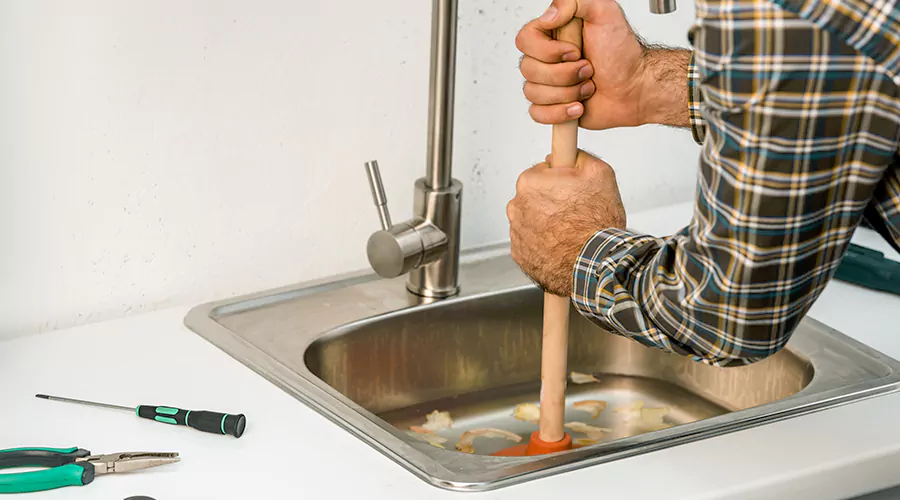
A blocked kitchen sink is usually fixed by clearing food or grease from the drain opening, P-trap or branch pipe. Professional sink unclogging generally costs $150 to $350 in 2026. If the sink or plumbing needs to be replaced, kitchen sink installation may also be needed. Start with a plunger before opening the plumbing beneath the sink.
The supplied keyword blocked kitchen sink has 5,000 average monthly searches.
This guide focuses on a sink that drains very slowly or does not drain at all.
What Causes a Kitchen Sink to Become Blocked?
Grease is one of the main kitchen drain blockage causes. Food attaches to the grease layer and reduces the opening over time. A garbage disposal can also hold food near its outlet.
- Coffee grounds can add dense material.
- Starchy food can collect inside existing buildup.
- A P-trap can hold solids.
- A deeper branch pipe can also become restricted.
The supplied keyword kitchen sink clogged has the same broad problem intent. A complete blockage often begins as a sink that was slow for several days or weeks.
What Should You Do First With a Blocked Sink?
Stop adding water when the sink is already full. Additional water makes the job messier and can cause an overflow.
- Turn off the faucet.
- Stop the dishwasher if it shares the kitchen drain.
- Switch off the disposal.
- Remove standing water.
- Place towels under the plumbing.
- Wear gloves.
Do not add a second chemical product if drain cleaner is already present. You need access to the drain before diagnosis. Standing water hides the opening and increases splash risk.
How Does a Kitchen Sink Blockage Progress?
A kitchen blockage gets worse as the remaining opening becomes smaller. The drain may handle a light faucet stream at first but fail when a full basin is released.
| Stage | Sink Behavior | Likely Condition | 2026 Cost Exposure |
|---|---|---|---|
| Early | Slightly slow | Grease buildup | Often DIY |
| Partial | Water pools | Food caught in grease | Low tool cost |
| Blocked | Standing water remains | Dense obstruction | $150 to $350 |
| Deeper | Other drains react | Branch or main line issue | $147 to $352+ |
Professional drain cleaning costs $147 to $352 in 2026 with an average of $246. Acting before total blockage makes mechanical clearing easier.
What Warning Signs Mean the Blockage Is Deep?
A blockage near the sink often affects only the kitchen fixture. A deeper drain problem can create symptoms elsewhere.
- Both sink bowls fill with water.
- The disposal runs but water stays.
- The P-trap is clean.
- Plunging produces no change.
- The hand auger meets deep resistance.
- The dishwasher backs into the sink.
- Another drain becomes slow.
- Several fixtures begin gurgling.
- Wastewater returns through the sink.
- The clog returns immediately after clearing.
A clean P-trap with continued blockage is a strong reason to investigate the wall-side drain.
Step 1: Check the Strainer
Remove food from the drain opening first.
- Take out the strainer.
- Discard visible debris.
- Check beneath the strainer.
- Remove loose food.
- Wipe away grease.
- Test with a small amount of water.
Do not push solid material deeper. If the sink still does not move, continue to the next step. A surprising amount of blockage can sit directly beneath a kitchen strainer.
Step 2: Check the Garbage Disposal
A disposal is one of the first checks when the blocked sink has one installed. Current 2026 guidance identifies a jammed disposal as a common cause in double kitchen sink backups.
- Disconnect electrical power.
- Never put your hand inside the chamber.
- Use the manufacturer-approved turning method.
- Check the reset button when applicable.
- Remove any safe-to-reach obstruction with suitable tools.
- Restore power after removing everything.
- Test the disposal.
A working disposal with standing water suggests that the restriction is farther down the drain.
Step 3: Plunge the Sink
A flat sink plunger is the next mechanical step.
- Remove excess water first.
- Leave enough to cover the cup edge.
- Seal the second drain if the sink has two bowls.
- Center the plunger.
- Push down.
- Pull upward.
- Repeat controlled strokes.
- Maintain the seal.
Current 2026 kitchen-sink guidance recommends plunging before moving to P-trap disassembly. A sudden water drop means the obstruction moved. Test before assuming it is fully gone.
Step 4: Clean the P-Trap
The P-trap is the curved pipe beneath the sink. It can hold food or grease.
- Place a bucket below it.
- Loosen the slip nuts.
- Remove the trap.
- Empty it.
- Clean the interior.
- Inspect the washers.
- Reinstall it when the clog is found.
- Test for leaks.
If the P-trap is clean, the blockage lies beyond it. The supplied keyword kitchen sink drain pipe fits the next stage of diagnosis. Do not force plastic connections during reassembly.
Step 5: Snake the Wall-Side Drain
A manual auger can reach beyond the P-trap into the branch drain.
- Leave the P-trap removed.
- Feed the cable into the wall pipe.
- Advance slowly.
- Rotate when resistance develops.
- Pull back slightly.
- Advance again.
- Retract the cable.
- Clean the debris.
- Repeat if flow improves.
Current 2026 drain-clearing guidance lists grease and food as common sink blockage materials that may need mechanical removal. Do not force a cable through strong unchanging resistance. A pipe bend can feel similar to a blockage.
What If Both Sides of a Double Sink Are Blocked?
When both bowls contain standing water the blockage usually sits after the two drains join. A garbage disposal can still be involved if one bowl connects through it.
- Remove water from both sides.
- Check the disposal first.
- Seal one bowl before plunging the other.
- Switch sides if needed.
- Inspect the shared P-trap.
- Move to the wall-side pipe if the trap is clear.
Professional clearing of a double kitchen sink commonly costs $150 to $350 in 2026. A blockage in the shared line affects both bowls even when only one drain received the original food.
What If the Dishwasher Backs Up Into the Sink?
A dishwasher can expose an existing kitchen drain blockage because it pumps water into a drain that cannot carry the added volume.
- Stop the dishwasher when backup begins.
- Check the sink drainage.
- Inspect the disposal.
- Confirm the disposal knockout was removed when the dishwasher connection is new.
- Look at the drain hose routing.
Current 2026 guidance identifies clogged kitchen plumbing and incorrect dishwasher drain-hose routing as common causes of sink backflow. Fix the sink blockage before assuming the dishwasher itself needs replacement.
Should You Use Chemical Drain Cleaner?
Chemical cleaner should not be the first choice for a fully blocked kitchen sink. Standing chemical water can create a splash hazard during later P-trap removal or snaking.
- Never mix cleaners.
- Do not combine drain opener with bleach.
- Avoid opening the trap when corrosive liquid is present.
- Do not snake unknown chemical water.
Professional drain-cleaning guidance warns that chemical drain cleaners can damage piping rather than solve the underlying problem safely. Mechanical removal also gives you evidence of what caused the blockage.
How Do You Test the Sink After Repair?
A sink is not truly clear until it handles a larger volume of water.
- Reassemble all plumbing.
- Run a small faucet stream.
- Check underneath for leaks.
- Increase the flow.
- Fill one basin partway.
- Release the stopper.
- Watch the drain speed.
- Check the second bowl.
A clear sink should empty quickly without backing up. Inspect the P-trap again after the large-flow test. A successful clog repair should not create a new leak.
When Should You Call a Professional?
Professional help is appropriate when the blockage remains after P-trap cleaning and hand-auger use. Multiple slow drains indicate that the obstruction may extend beyond the kitchen branch.
Professional drain cleaning costs between $147 and $352 in 2026. Main sewer line clog repair averages about $380 when the restriction sits farther downstream.
Professional diagnosis is reasonable when:
- The hand auger cannot restore drainage.
- Several fixtures are blocked.
- Wastewater backs into the sink.
- The clog returns within days.
- The drain pipe is damaged.
- The sink begins leaking during backup.
Longer equipment can reach obstructions beyond normal household-tool range.
How Can You Prevent Another Blocked Kitchen Sink?
The best prevention is keeping grease and food out of the drain before they can create another obstruction.
- Use a basket strainer.
- Scrape plates into the trash.
- Dispose of grease separately.
- Use the disposal only for suitable material.
- Run adequate water during disposal use.
- Respond to slower drainage early.
Angi's 2026 kitchen sink guidance identifies grease from cooking fats and oils as the most common kitchen sink clog cause. Prevention costs far less than the $150 to $350 typical professional unclogging range.
Conclusion
To fix a blocked kitchen sink, work downstream in a controlled order. Clear the strainer and check the garbage disposal first. Plunge before removing the P-trap. If the trap is clean, snake the wall-side drain. A sink that stays blocked after those steps or affects other fixtures may have a deeper restriction. This week, install a basket strainer and stop cooking grease before it reaches the drain.
Frequently Asked Questions
Why is my kitchen sink completely blocked?
Grease mixed with food can form a dense obstruction. A clogged P-trap or deeper branch pipe can create the same symptom.
Can I plunge a kitchen sink full of water?
Yes. Remove excess water first and leave enough to cover the plunger rim.
Why is the sink still blocked after cleaning the P-trap?
The obstruction is probably farther into the wall-side branch drain.
Can the dishwasher make a blocked sink worse?
Yes. Dishwasher discharge adds more water to a drain that is already restricted.
Why does the blockage keep returning?
Grease can remain along the pipe wall even after a small path is reopened.